


PowerLab Sensors put learning in your students' hands, enabling them to quickly and easily record physiological signals in Lt or Lt LabStation.

Everything you need in one powerful, flexible package
PowerLab Sensors integrate seamlessly with Lt or Lt LabStation, creating a complete active learning platform that boosts student engagement and understanding. Develop student research skills with laboratory sensors built for learning.
Combine PowerLab Sensors with Lt, our online learning platform:
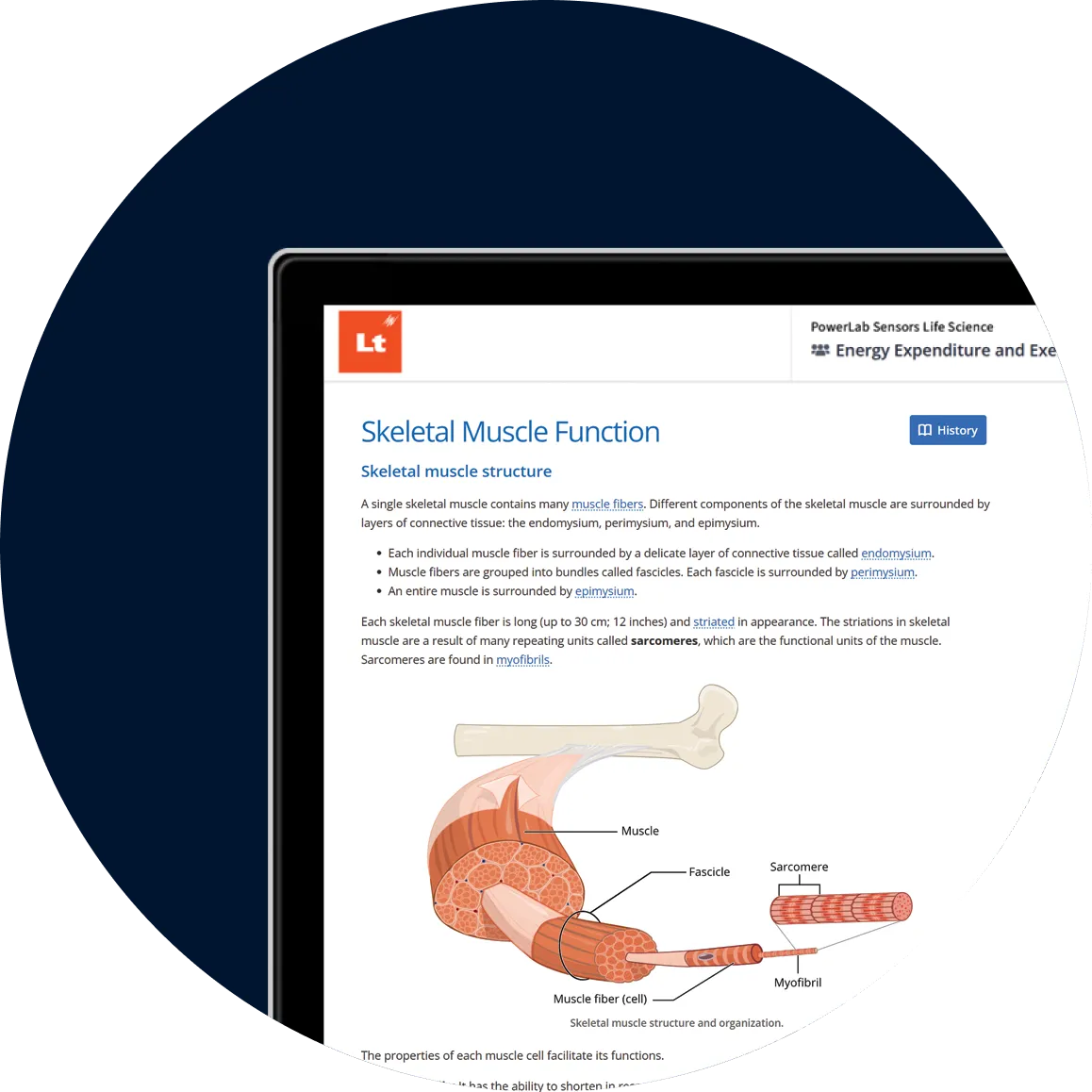
fully editable lessons
Fully Customizable Content
Streamline course creation by customizing our ready-made lessons, with high-quality content, images, and experiments designed to support your teaching style.
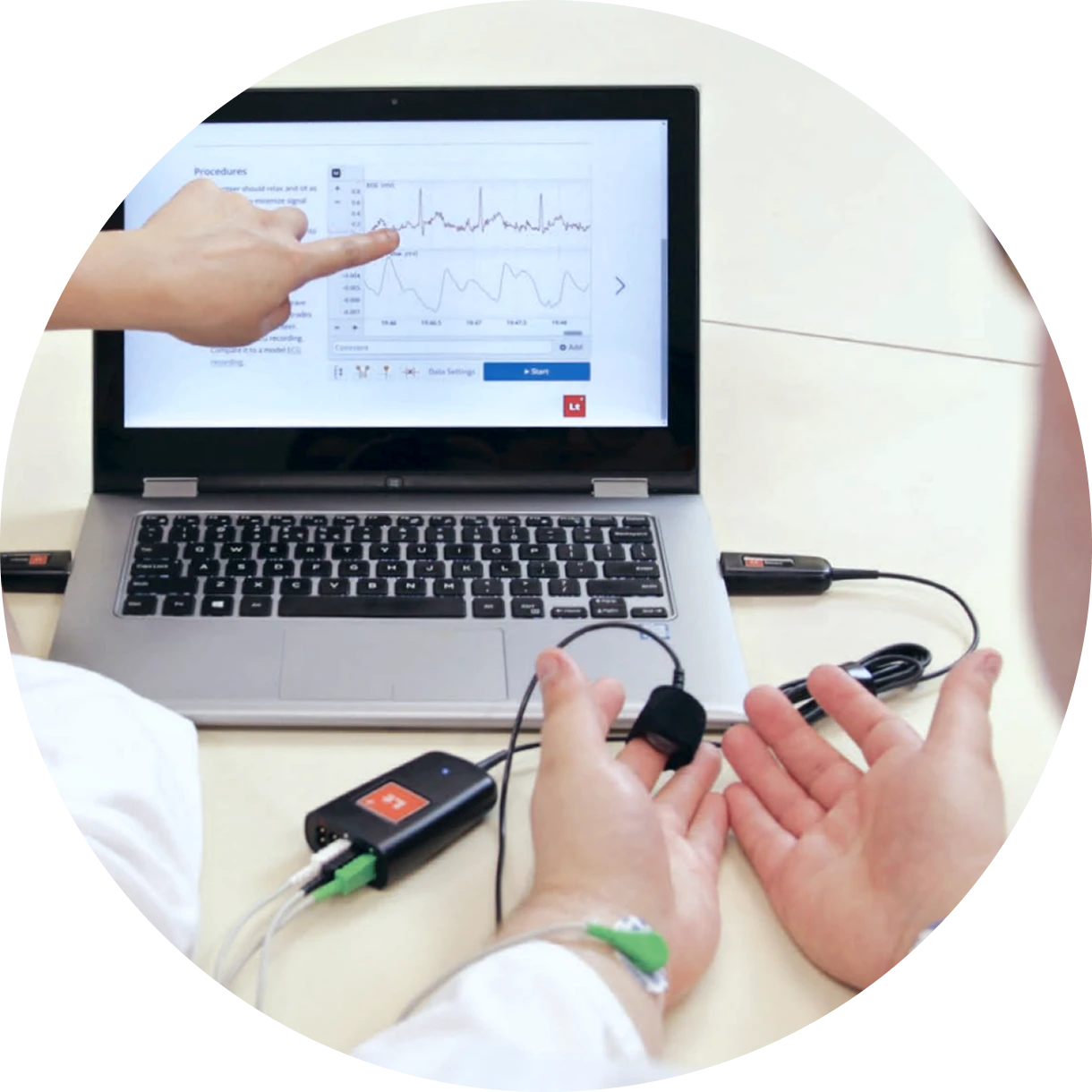
via USB
Easy-to-use, consistent environment
Designed to plug in and record directly into Lt, PowerLab Sensors minimize lab set-up time, and keep your students in a digital environment they’re already comfortable with.
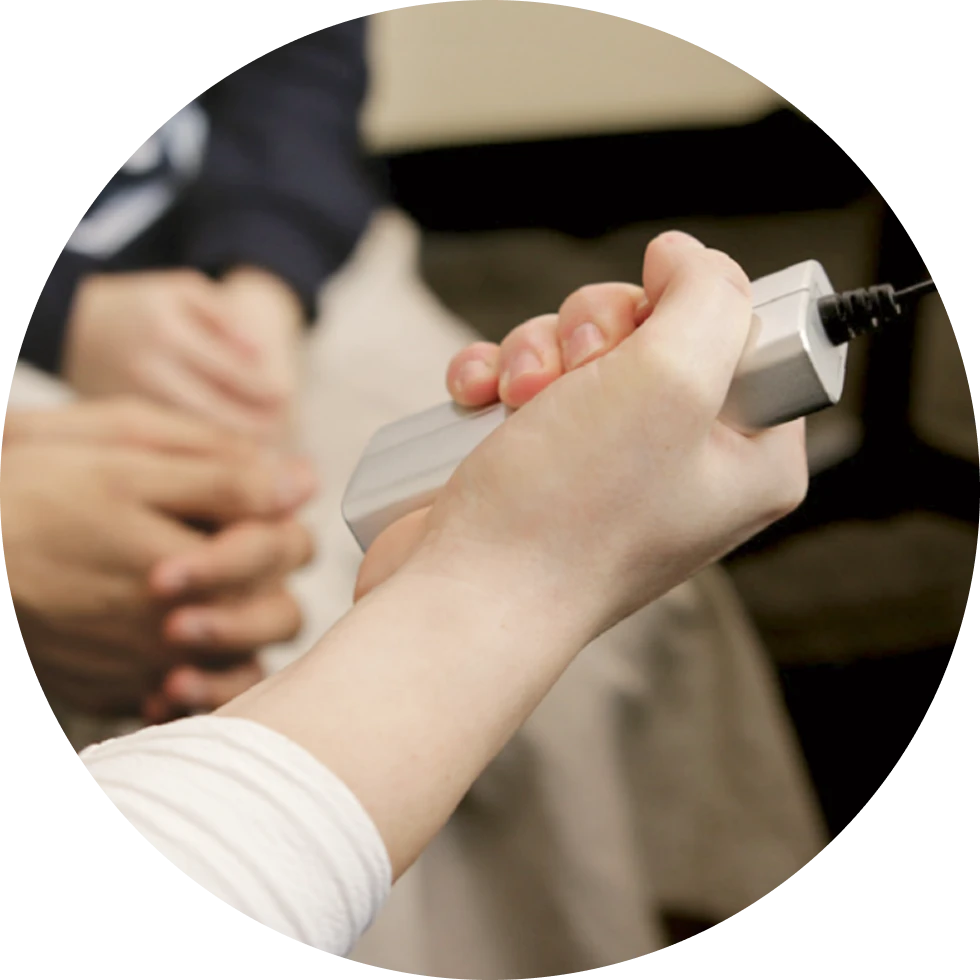
space a lab
space
Learn anywhere
By combining PowerLab Sensor’s simple USB connection, and Lt’s cloud-based learning platform, you can plug in and record signals anywhere.
PowerLab Sensor Bundles and Capabilities
PowerLab Sensors can be purchased individually or in our Core or Advanced bundles.
More Sensors and Kits are available if needed for your course.
Core Bundle

The Core PowerLab Sensors Bundle enables you to investigate a wide range of biological signals. It contains six sensors, a PowerLab T1, as well as accessories and consumables needed for data acquisition across many of our human physiology labs.
Products Included
Advanced Bundle

The Advanced PowerLab Sensors Bundle enables you to investigate all of the biological signals we offer. It contains nine sensors, a PowerLab T1, as well as the necessary accessories and consumables for data acquisition across our human physiology labs.
Products Included
✓Powerful
An active learning tool that empowers students.
✓Flexible
Record data in the lab or out in the world.
✓Accurate
Research-quality sensors, for training future scientists.
✓Durable
Built for demanding teaching labs and repeated student use.
✓Authentic
Real physiological signals recorded before your eyes.
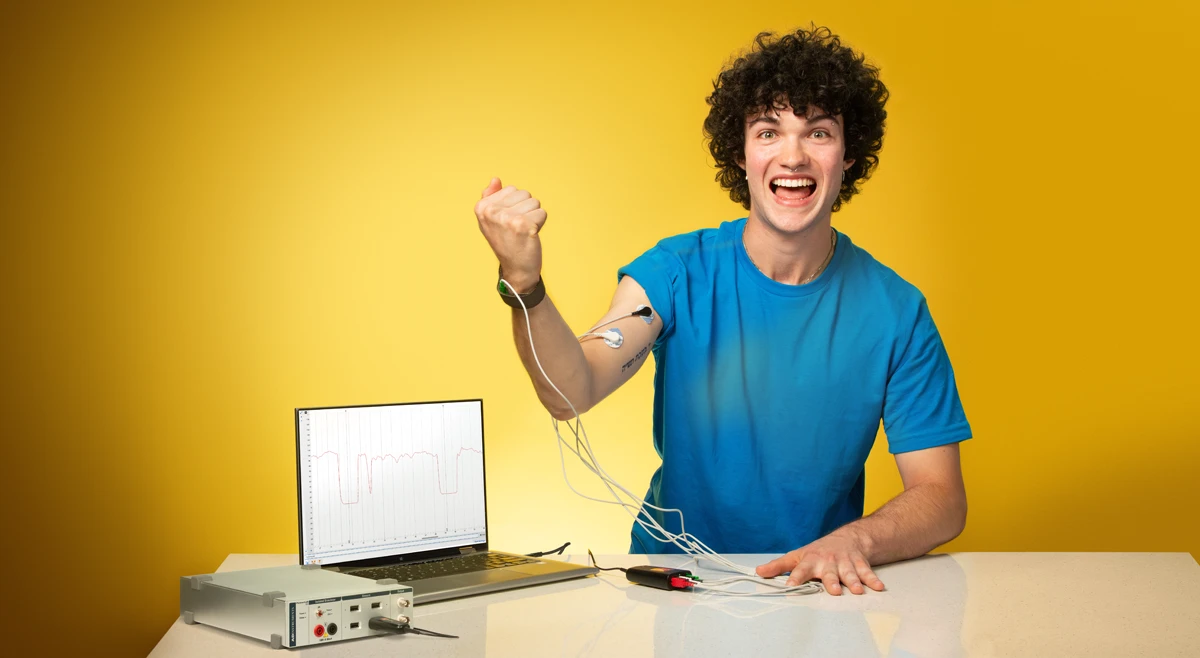
Our ten advanced PowerLab Sensors connect directly to Lt through the USB connection on your Windows or macOS® device. Students use PowerLab Sensors to record and analyze their own physiological signals in real time – collecting authentic data for ECG/EKG, EEG, EMG, EOG, spirometry, respiratory rate, and finger pulse experiments. This active engagement helps students to quickly grasp and understand core physiological concepts in Lt’s Human Physiology Labs.
PowerLab Sensors are the future of educational sensors. Significant upgrades have been made to our educational PowerLab (T1) and the Biopotential Sensor. The PowerLab T1 offers powerful electrical stimulation, capable of stimulating human or animal tissue for up to 10 milliseconds. Our improved Biopotential Sensor records in research-quality 40kHz, and acts as an ECG sensor, EEG sensor, EMG sensor, and EOG sensor, all in one.
“The move to USB-style sensors is a brilliant idea. My students are no longer apprehensive about operating a complicated ‘box with buttons and knobs’ apparatus that needs special operators. They plug in and go!”
Dr Burhan Gharaibeh
Associate Professor, Biological Sciences, University of Pittsburgh
"I'm taking the T1 into lecture theatres and doing live experiments with my students, making lectures way more interactive."
Dr Liam Bagley
Senior Lecturer of Physiology, Manchester Metropolitan University
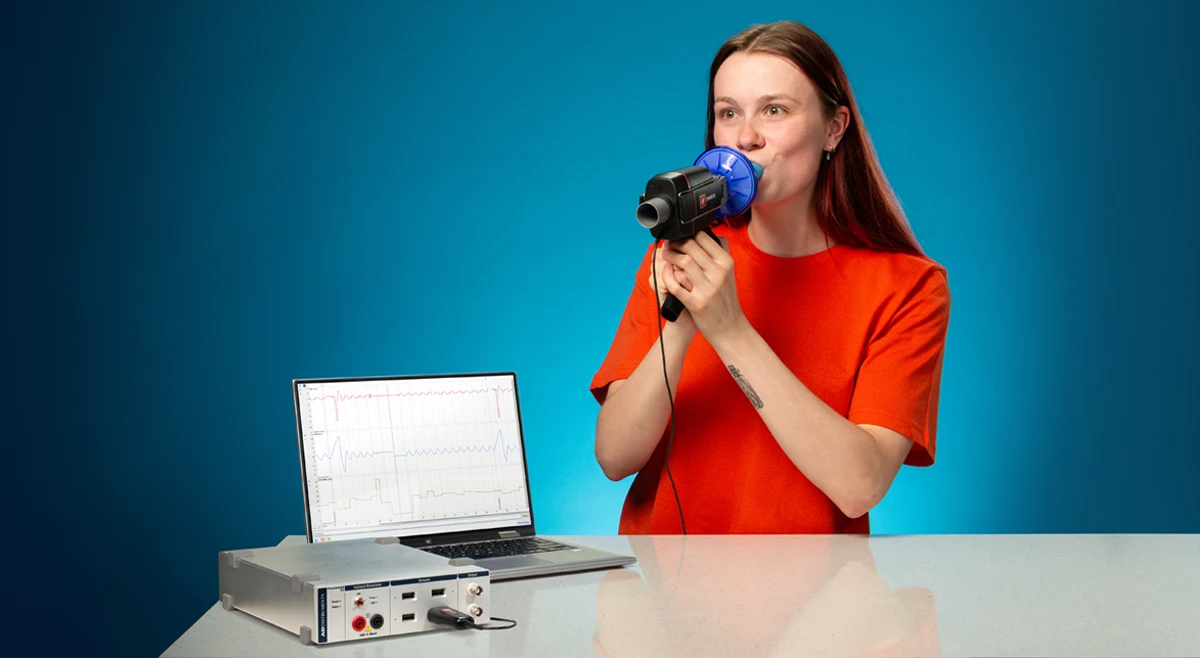
ADInstruments’ PowerLab Sensors connect directly to the Lt learning platform — a cloud-based teaching system used globally in life sciences and medicine — making them ideal for hands-on, data-driven lessons in courses like anatomy, physiology, and exercise science. The plug-and-play design allows instructors to build practical labs with real-time data recording, while students can log in to complete lessons, answer questions, and review their own results. This integration supports both in-lab and remote learning environments, reducing setup time while improving engagement.
"Easy to use - no-nonsense. [PowerLab] Sensors allow students to focus on learning, rather than hardware set-up."
Dr Mike Gill
Professional Practice Fellow, Physiology, University of Otago
"Investing in PowerLab Sensors allows us to take physiological measurements beyond traditional labs, creating active learning spaces where students engage with real data wherever they are."
Dr Gethin Evans
Deputy Head of School, Biological and Chemical Sciences, Manchester Metropolitan University
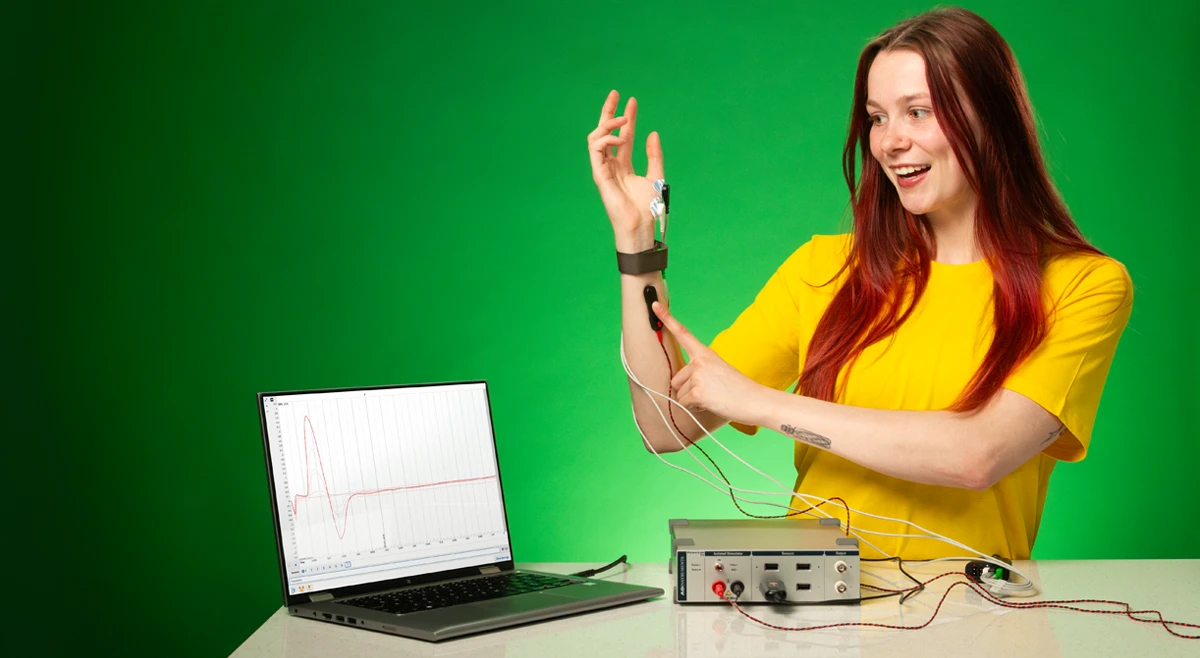
PowerLab Sensors are perfect for educators who require new or additional hardware for human physiology courses. Together with our learning platform Lt, these sensors are an integrated data acquisition solution that give students an authentic lab experience, while also allowing flexibility between face-to-face and remote learning.
"I really enjoyed using the sensors, as it was more hands-on and interactive. They definitely made me more invested in the work I was doing … to be able to work hands-on with EKGs, pulse oximeters, thermometers, etc. brought a different type of understanding to the course content."
Physiology Student
University of North Carolina at Pembroke
“What I love most about the PowerLab Sensors is ease of use, portability, and power.”
Dr Liam Bagley
Senior Lecturer of Physiology, Manchester Metropolitan University
PowerLab T1
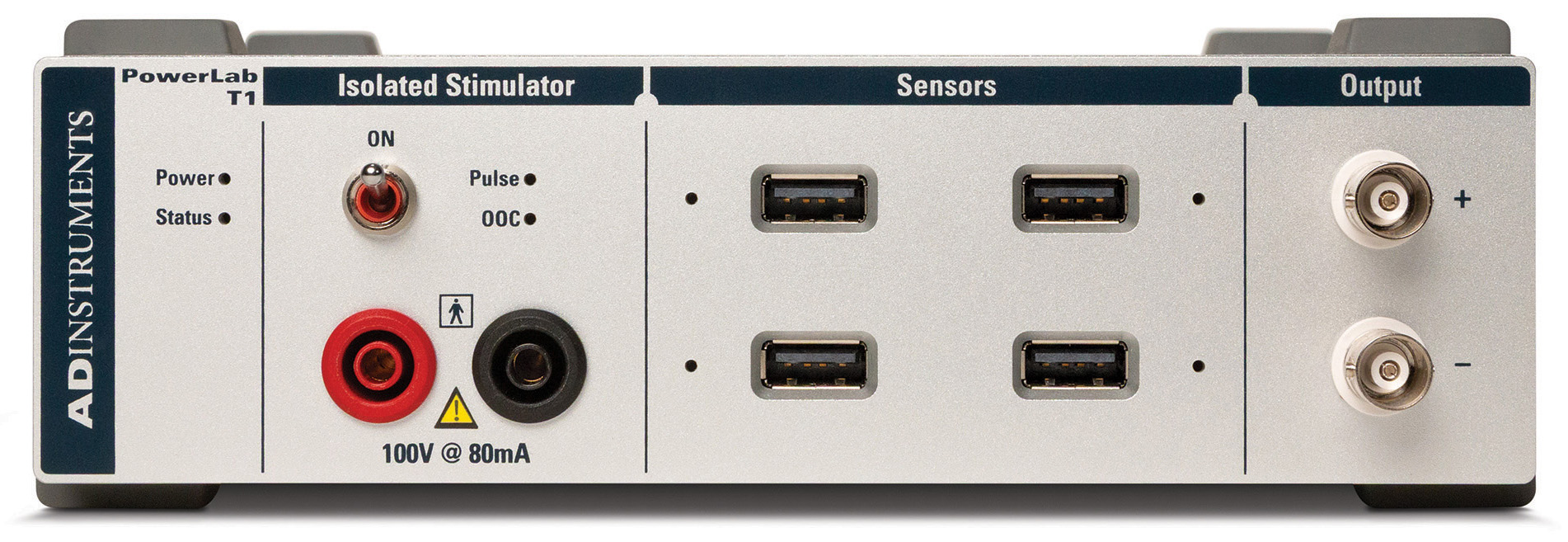
The ideal data acquisition solution for life science classroom experiments. The PowerLab T1 is designed to withstand heavy use while maintaining data accuracy and reliability. Give your students research-level experience with high-quality data acquisition, high-frequency signal synchronisation when using multiple sensors, and isolated 100V 80mA stimulation for up to 10 milliseconds.
Software Solutions that Fit Your Lab
PowerLab Sensors seamlessly integrate with Lt and Lt LabStation. Simply plug your sensors in and start recording with the software of your choice.
Compatibility with LabChart is currently in development to provide even greater flexibility.
Lt
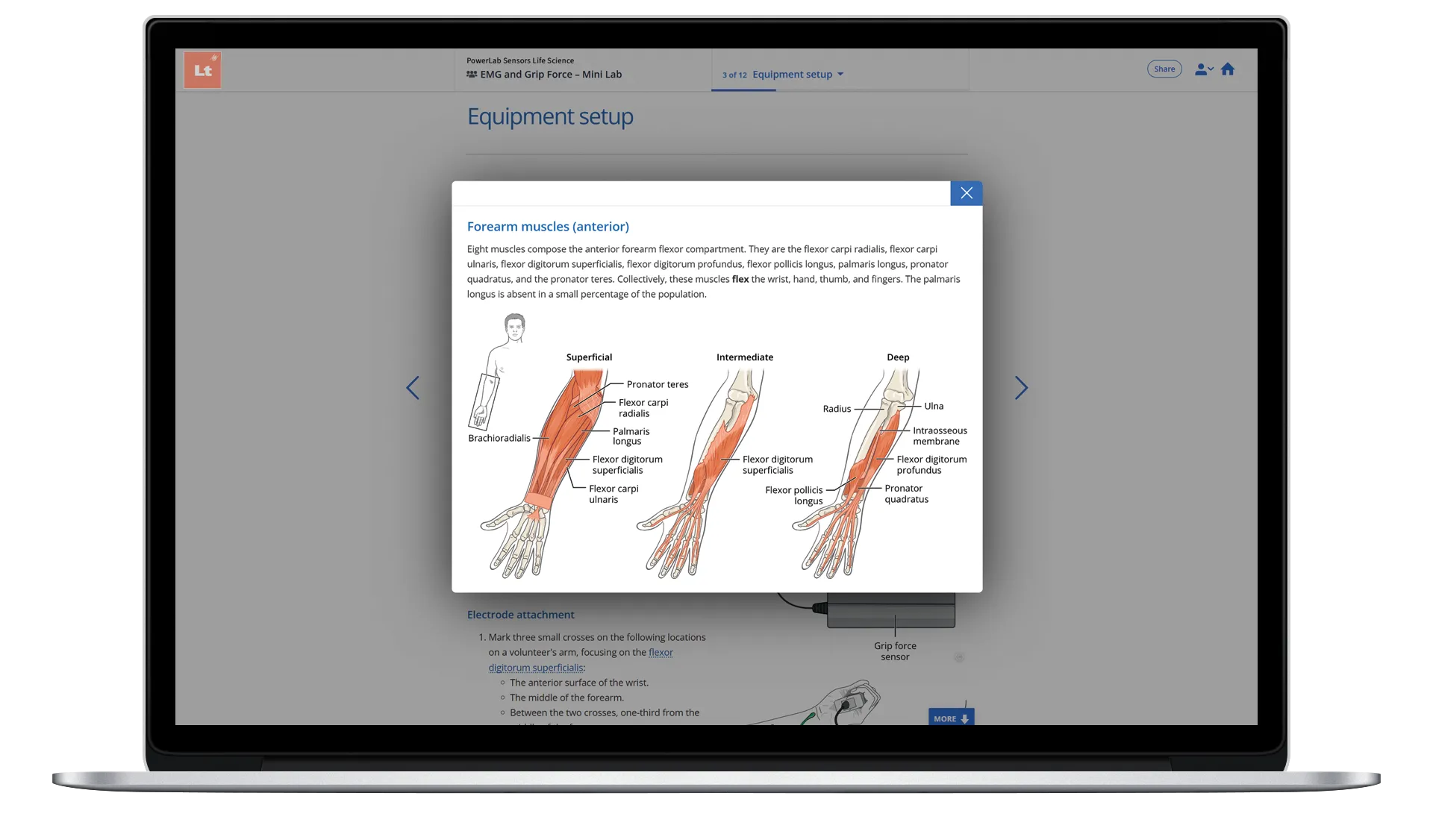
Lt is an online learning platform with ready-to-use content for life sciences, nursing and medicine. Over 900 interactive and fully-customizable lessons are available for use. Reinforce theory through experimentation by pairing Lt with PowerLab Sensors so that students can record and analyze physiological signals in real time.
Lt LabStation
Lt LabStation is a lab-based learning platform where you can create interactive lessons for students to work through in an offline environment (sold separately). Over 150 fully-editable lab lessons are also available for use. Students can record and analyze physiological signals using PowerLab Sensors and Lt LabStation to reinforce theory through experimentation.
What labs can I teach with PowerLab Sensor Bundles and Lt’s Human Physiology Collection?
Add-On Sensors and Kits


Lt Content Collections
FAQ, Details and Tech Specs
Are you using Lt Sensors? See our FAQ on the Transition from Lt Sensors to PowerLab Sensors.
The next generation of ADInstruments hardware, reimagined specifically for the modern classroom. This expanded line combines the professional-grade data integrity you expect with a new, flexible USB-A design that makes setup effortless. Every device is built to be powerful, reliable, and—most importantly—durable enough to handle the rigors of daily student use, ensuring you can focus on teaching rather than troubleshooting.
Wireless technology is ideal in some situations, and we do produce wireless research solutions in the form of our Kaha Telemetry range. However, we have found that wireless technology works best in a consistent, singularly focused lab environment, whereas PowerLab Sensors are intended to be used wherever and whenever you need them.
PowerLab Sensors were developed as wired sensors for two main reasons: first, to optimize for the highest-quality physiological signal with the least hardware and the shortest setup and pack-down time; second, to encourage students to fully engage with the sensor as a piece of research equipment.
By designing the PowerLab Sensors as wired physiological sensors, we preserve signal quality and speed while eliminating interference from other wireless devices, without the need for extra hardware. The sensor parts remain in a single, intact object, reducing the risk of losing crucial components. Setting up the sensor for data collection is as simple as plugging in the USB, with no need to worry about battery life or charging between labs. The wire also acts as a literal tether, meaning that your students won’t walk away with pieces of the PowerLab Sensor still attached to them.
Whether you are measuring a quick reflex or a complex cardiovascular cycle, we've got you covered. The new PowerLab Sensors are designed to capture a huge range of physiological data accurately.
Here's a quick breakdown of what you can measure and which tool you'll need:
| If you want to measure... | Use this Sensor: |
|---|---|
| Heart Activity (ECG), Muscle Activity (EMG), Eye Movement (EOG), Brain Activity (EEG), or Gut Activity (EGG) | Biopotential Sensor |
| Heart Activity (ECG) | 12-Lead ECG |
| Nerve Conduction Velocity | PowerLab T1 and Biopotential Sensor |
| Breathing Rate | Respiratory Belt or Spirometer |
| Lung Volumes | Spirometer |
| Heart Rate | Finger Pulse Sensor or Biopotential Sensor |
| Pulse Amplitude | Finger Pulse Sensor |
| Heart Sounds or Korotkoff Sounds | Cardio Microphone |
| Analog Output for 3rd Party Connection | PowerLab T1 |
| Blood Pressure (Systolic/Diastolic) | Blood Pressure Transducer |
| Grip Strength & Muscle Fatigue | Grip Force Transducer |
| Reflexes & Reaction Times | Tendon Hammer or Push Button Switch |
| Body Temperature | Skin Temperature Sensor |
| Joint Angles & Movement | Goniometer |
| General Force | Force Transducer |
| Galvanic Skin Response (Electrodermal Response) | GSR Sensor |
Special Note on the PowerLab T1: If you're looking to take your lab to the next level, the PowerLab T1 is your "all-in-one" hub. It handles electrical stimulation, keeps your data perfectly synced, and provides analog outputs—essentially acting as a bridge to convert your signals into high-quality digital data (DAQ).
We know lab benches can get crowded, so we've kept these units lean and portable.
- The PowerLab T1: This is your main hub, but it's surprisingly compact. It weighs less than 3.5 lbs (1.6 kg) and measures roughly 8" x 2.5" x 10". It's about the size of a small textbook!
- The PowerLab Sensors: These are even lighter and incredibly easy to handle. Every sensor comes with a 6ft (1.8m) cable. You'll have plenty of slack to move around the classroom or reach a subject comfortably.
While we've kept the connections universal using standard USB-A, we highly recommend using the PowerLab T1 as the heart of your station.
- The Standard Setup (Highly Recommended): Plug your sensors directly into the PowerLab T1. Using the T1 as your central hub is the best way to ensure perfect data synchronization, access stimulation features, and keep your workspace organized.
- The Mobile Setup: If you're on the move or only using a few sensors, you can also plug them directly into your computer's USB-A port.
No matter how you plug them in, it's a "plug-and-play" experience designed to get you up and running in seconds.
Exact specs depend on the software you choose to run! For the smoothest experience, check the specific specs for your chosen platform here:
- Lt System Requirements
- Lt LabStation System Requirements
Out of the box, PowerLab Sensors work perfectly with Lt and Lt LabStation.
The Future: We know many of you love LabChart, so stay tuned! We are currently working on an update that will allow PowerLab Sensors to work with LabChart as well.
The full range of PowerLab Sensors enables all of our content collections, including the entire Human Physiology Collection.
The PowerLab Biopotential Sensor is a dual-channel, galvanically-isolated, high-performance differential amplifier optimized for the measurement of a wide variety of biopotential signals. This sensor records at a research-grade 40kHz sampling rate, making it an ideal choice for educational settings that aim to develop real-world research skills.
While an individual ECG/EKG sensor is a great tool in an educational environment, the flexibility of the PowerLab Biopotential Sensor to be used as an ECG sensor, EEG sensor, EMG sensor, and EOG sensor, all in one, makes it a more economical long-term choice.
Yes, many customers use both device types within the same teaching lab. You can run labs that include a mix of PowerLab 26T systems and PowerLab Sensors, as long as you use the correct lab content designed for each device type. Typically, some student groups use PowerLab while others use PowerLab Sensors within the same session.
However, PowerLab Sensors are USB devices and do not connect directly to a PowerLab. Because of this, you cannot record from a PowerLab and a PowerLab Sensor simultaneously within the same Lt or LabStation data panel. Each recording panel can sample from one device type at a time.
If you would like guidance on setting up mixed device labs, please speak with your representative.
You can use the new PowerLab Sensors right alongside your Lt Sensors without any interruptions! Because both sensor lines use the same Lt Sampling App to talk to your computer and the same settings files, they play very nicely together.
Yes, but support depends on the platform and Sensor.
LabChart settings authoring
- Support for creating Sensor settings in LabChart is currently in development. Once released, you will be able to create Sensor settings in LabChart and use them for recording in LabChart.
- Settings created in LabChart cannot be transferred to Lt. Lt Sampling does not support all LabChart features, so custom LabChart settings may not work in Lt.
Lt settings authoring
- For the T1 Stimulator, you can create your own stimulator settings directly in Lt. LabChart is not required.
- To create stimulator settings that also use other Sensors, such as Biopotential, you will need to start with an existing settings file from a lab or from the settings library, then add your stimulator settings.
- Support for creating settings in Lt for other Sensors is on the roadmap. In the future, you will be able to create all Sensor settings directly in Lt.
PowerLab Sensors used with Lt are compatible with macOS and Windows-based laptops or desktops via USB.
PowerLab Sensors used with Lt LabStation are only compatible with Windows-based laptops or desktops via USB.
Please see Lt Device and Browser Support for more specific details.
The data cards containing individual PowerLab Sensor specifications are listed below:
Please see our PowerLab Sensor support articles within our Lt Support hub.